


Board members play an important role in helping a non-profit organization stay financially responsible and focused on its mission. But to make good decisions, they need more than a spreadsheet full of numbers.
Clear, accurate, and timely non-profit financial reports give board members the information they need to understand where the organization stands, identify potential concerns, and plan for the future.
The key is providing the right information without overwhelming them.
Every organization is different, but there are several financial reports that boards commonly rely on.
Sometimes referred to as a balance sheet, this report provides a snapshot of the organization's financial position at a specific point in time.
It typically shows assets, liabilities, and net assets, helping board members understand the organization's overall financial health.
This report shows revenue and expenses over a specific period.
For non-profits, it can help the board understand where funding is coming from and how money is being spent across programs and operations.
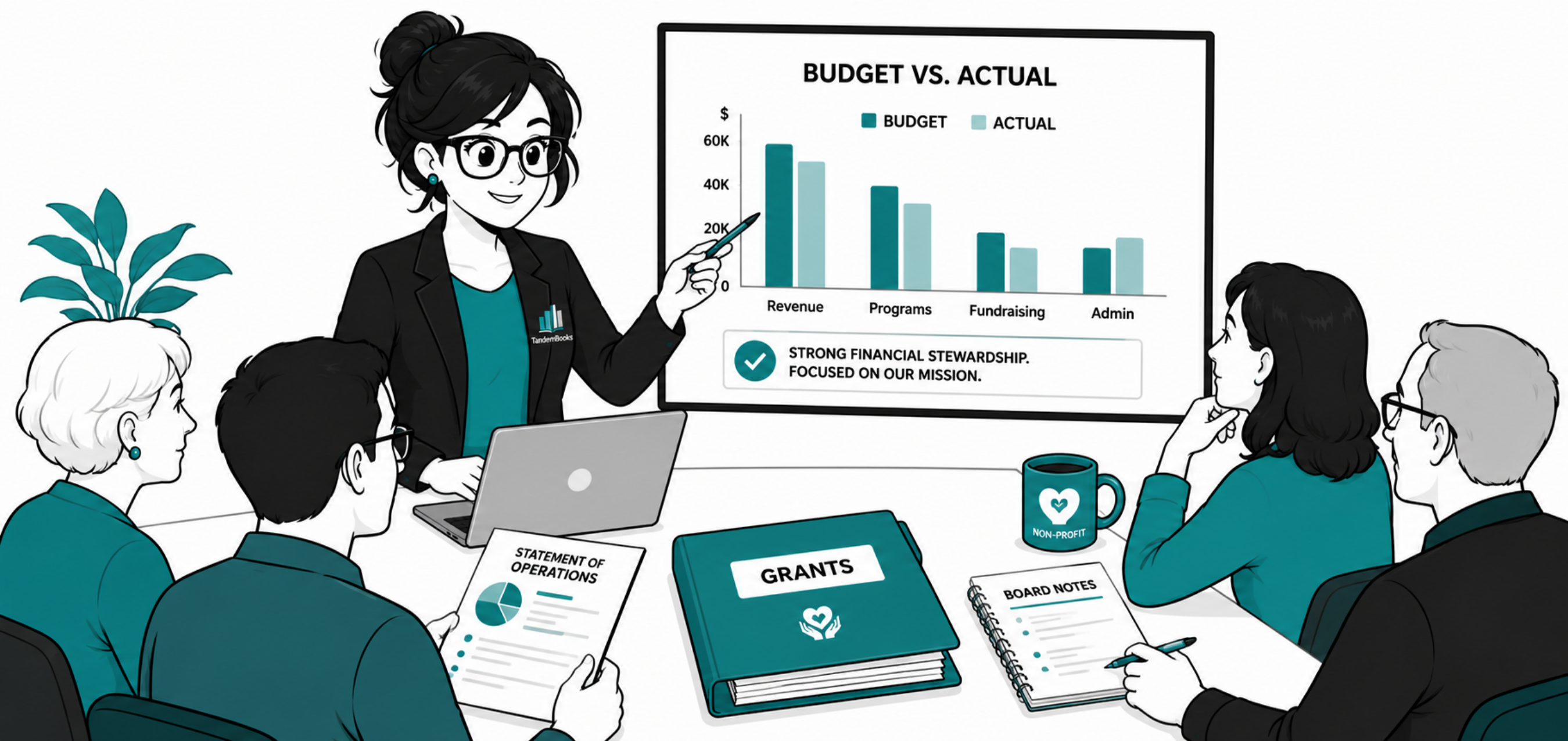
A budget is much more useful when it's regularly compared with what is actually happening.
A budget-versus-actual report allows the board to identify significant differences between planned and actual revenue or expenses and ask questions before small concerns become larger issues.
An organization can have funding committed and still experience cash flow challenges.
Boards should have enough information to understand the organization's available cash and upcoming financial obligations. This is especially important when funding or grants are received at specific times throughout the year.
Many non-profits receive money that must be used for specific programs or purposes.
Financial reporting should make it clear how restricted funds and grant funding are being tracked and used. This can help the board oversee funding requirements and prepare for reporting to funders.
More information isn't always better.
Financial reports should help board members quickly understand the organization's financial position and identify areas that require attention.
Using a consistent reporting format from one meeting to the next also makes it easier to recognize trends and compare results over time.
At TandemBooks, we understand the unique bookkeeping and reporting needs of non-profit organizations.
Our team can help maintain accurate financial records, organize grant and program information, and prepare clear financial reports that support board oversight and decision-making.
With reliable financial information available throughout the year, your board can spend less time trying to understand the numbers and more time focusing on your organization's mission.
Good financial reporting isn't about giving your board every number available. It's about providing clear, useful information that helps members understand the organization's financial position and make informed decisions.
Looking for specialized bookkeeping support for your non-profit organization? Contact TandemBooks to learn how we can help keep your financial records and reporting organized.

