


You completed the work, sent the invoice, and now you're waiting to get paid.
Late payments are a common challenge for small businesses, and sometimes the problem starts with the invoice itself. Missing information, unclear payment terms, or inconsistent follow-ups can create unnecessary delays and affect your cash flow.
The good news is that a few simple invoicing practices can make it easier for customers to understand what they owe, when payment is expected, and how to pay.
An invoice should make it easy for your customer to understand exactly what they're paying for.
Before sending an invoice, check that it includes:
Even a small error can lead to questions and unnecessary delays.
When is the invoice actually due?
Clearly stating terms such as Due on Receipt, Net 15, or Net 30 helps establish expectations from the beginning.
Whatever terms your business chooses, consistency is important. Customers should know when payment is expected and which payment methods are available.
The sooner you invoice after completing the work or reaching an agreed billing milestone, the sooner the payment process can begin.
Creating a regular invoicing routine can help prevent completed work from sitting unbilled for days or weeks.
Following up about money isn't always comfortable, but overdue invoices shouldn't be forgotten.
Review your accounts receivable regularly and establish a consistent process for sending professional payment reminders.
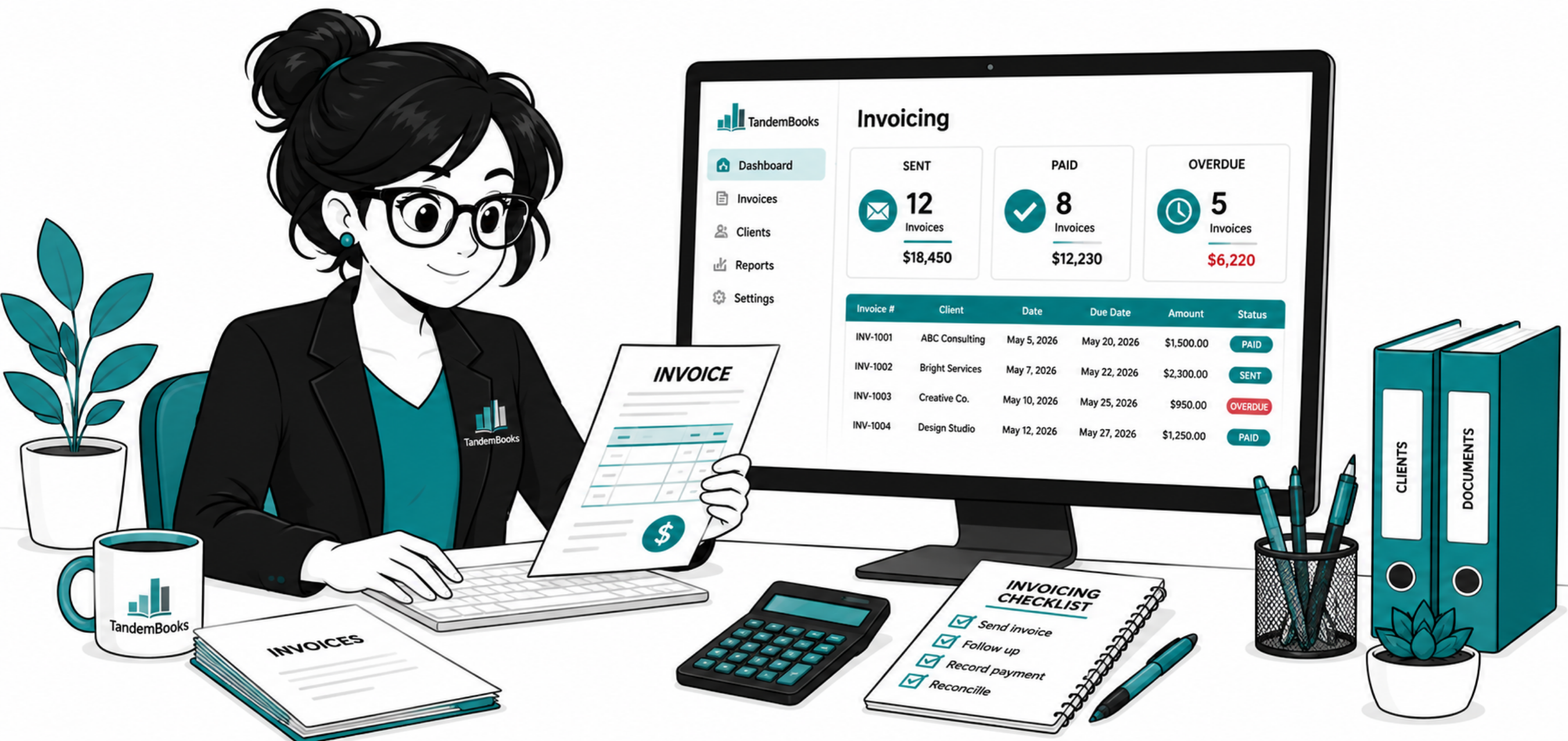
Many small businesses use accounting tools to help organize invoices and keep track of outstanding payments.
QuickBooks Online, for example, can help businesses create and manage invoices, track payment status, and keep customer information organized in one place.
Depending on your business and its needs, these features can help simplify your invoicing and bookkeeping processes.
TandemBooks participates in the QuickBooks ProAdvisor program and can help clients understand and use QuickBooks Online features that are relevant to their business while establishing bookkeeping processes that fit their specific needs.
Invoicing isn't simply an administrative task. It plays an important role in managing your cash flow.
Knowing what has been invoiced, what has been paid, and what remains outstanding provides a clearer picture of your finances and helps you plan upcoming expenses.
At TandemBooks, we help businesses maintain accurate books and improve their day-to-day financial processes.
Whether you need help managing accounts receivable, organizing your bookkeeping, or making better use of accounting tools such as QuickBooks Online, our team can help you develop processes that work for your business.
Getting paid on time often starts with making the payment process clear and straightforward for your customers.
Accurate invoices, clear payment terms, timely billing, and consistent follow-ups can help improve your accounts receivable process.
Need help improving your bookkeeping and invoicing processes? TandemBooks can help you stay organized and make better use of accounting tools, including QuickBooks Online, when appropriate for your business. Contact our team to learn more.

